

Sterling Oakbridge is a white-glove moving company serving Montauk, the hamlet at the far eastern tip of Long Island's South Fork — Wikipedia has the geography. Every move here runs with one named crew, a written quote explained line by line, and a photographed inventory of everything that travels. What follows is how moving in Montauk actually works — the housing stock, the seasonal calendar, and the access questions that decide how move day goes.
What shapes moving in Montauk
Montauk's housing is not typical Long Island. The streets hold shingle-style cottages, some close to a century old, alongside newer beach houses, seasonal rentals, and condos and co-ops near Lake Montauk. Large estates and older colonials are far less common here than elsewhere on the island. That mix changes the work: more stairs and decks, more salt-worn wood and glass, fewer freight elevators. Montauk sits at the eastern edge of our New York service areas, and moves here are planned around the town's own logic rather than a suburban template.
The calendar matters as much as the floor plan. From Memorial Day to Labor Day, the year-round population is joined by a seasonal surge that fills the roads, the village, and nearly every parking space. Many moves cluster at the start and end of the season, and short-term rental rules give some homes fixed occupancy windows that a move date must respect. A July move and an October move are two different jobs.
Most people reading this page are weighing labor-only help against a full-service move, and trying to learn what a Montauk move should cost before anyone visits. Fair questions. The sections below lay out what full service covers, how to compare companies, and what to expect from the first survey to the last placed carton.
What a white-glove move in Montauk includes
As local movers in Montauk, our scope for a town like this covers:
- A pre-move survey, in the home or by video, that measures staircases, doorways, and deck access before anything is quoted
- Full or partial packing, with materials chosen for coastal homes and their contents
- A photographed inventory, so every carton and furniture piece is documented before loading
- Custom crating for art, mirrors, glass tops, and fragile or oversized pieces
- Certificates of insurance for any condo, co-op, or managed property that requests one
- Storage for gaps between move-out and move-in, including seasonal overflow
- Placement to plan — furniture set where you want it, cartons in the right rooms, packing debris removed
One crew. Start to finish.

How to choose a mover in Montauk
The Montauk results page mixes lead brokers, labor-only platforms, and full-service carriers. They are not the same product, and the comparison only works if you ask each one the same questions.
1. Get the quote in writing, itemized. A verbal range or an instant online number is not a quote. Ask what the price includes, what it excludes, and what happens if the inventory changes. 2. Ask who physically shows up. Brokers and labor platforms pass your move to a third party. You should know the name of the company — and the crew — before move day. 3. Confirm valuation coverage in writing. Ask what is covered, at what level, and exactly how a claim is filed and settled. 4. Raise certificates of insurance early. Even if your building has not asked, a mover who cannot issue a COI has told you something useful. 5. Test local knowledge. Anyone working the East End should raise summer traffic, seasonal occupancy windows, and truck access on narrow streets before you do. 6. Ask where storage lives. If your dates do not line up, find out whether your goods stay in the mover's hands or someone else's.
None of these questions are confrontational. A company that hesitates on any of them has answered you.
How a Montauk move runs with us
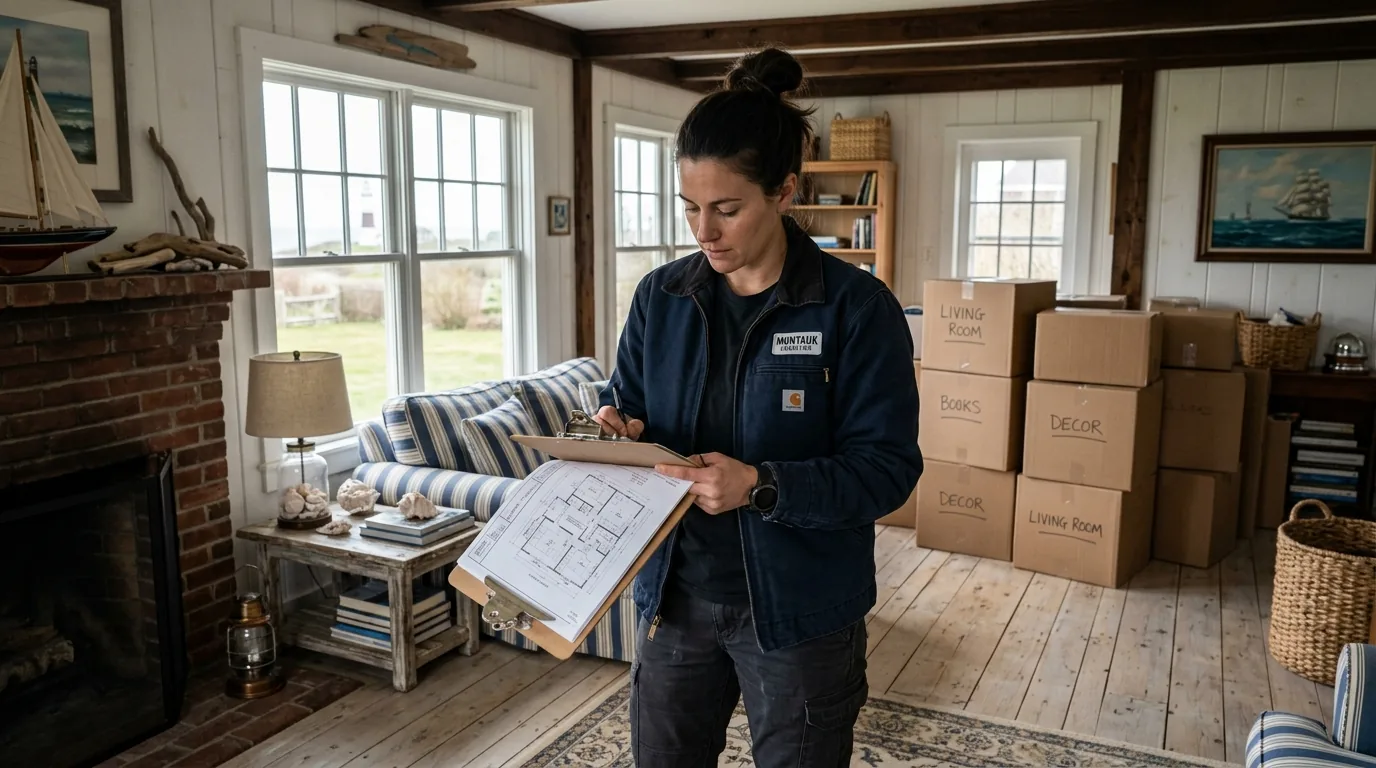
It starts with a survey. A senior move coordinator walks the property — or reviews it by video — and measures the things that decide move day: stair width, turns, doorways, the distance from truck to door, and any pieces that need crating. In Montauk that often means noting deck stairs, outdoor furniture, and where a truck can realistically sit.
From the survey comes a written plan and a written quote. The quote is itemized and explained line by line, so you can see what each part costs and why it is there. It is a number we keep.
Packing usually runs one or two days before the move itself. Everything that travels is wrapped, cartoned, and entered into the photographed inventory. On move day, the same named crew that packed loads, transports, and unloads. Placement to plan finishes the job: furniture positioned room by room, cartons where they belong, materials removed.
Access, parking, and timing in Montauk
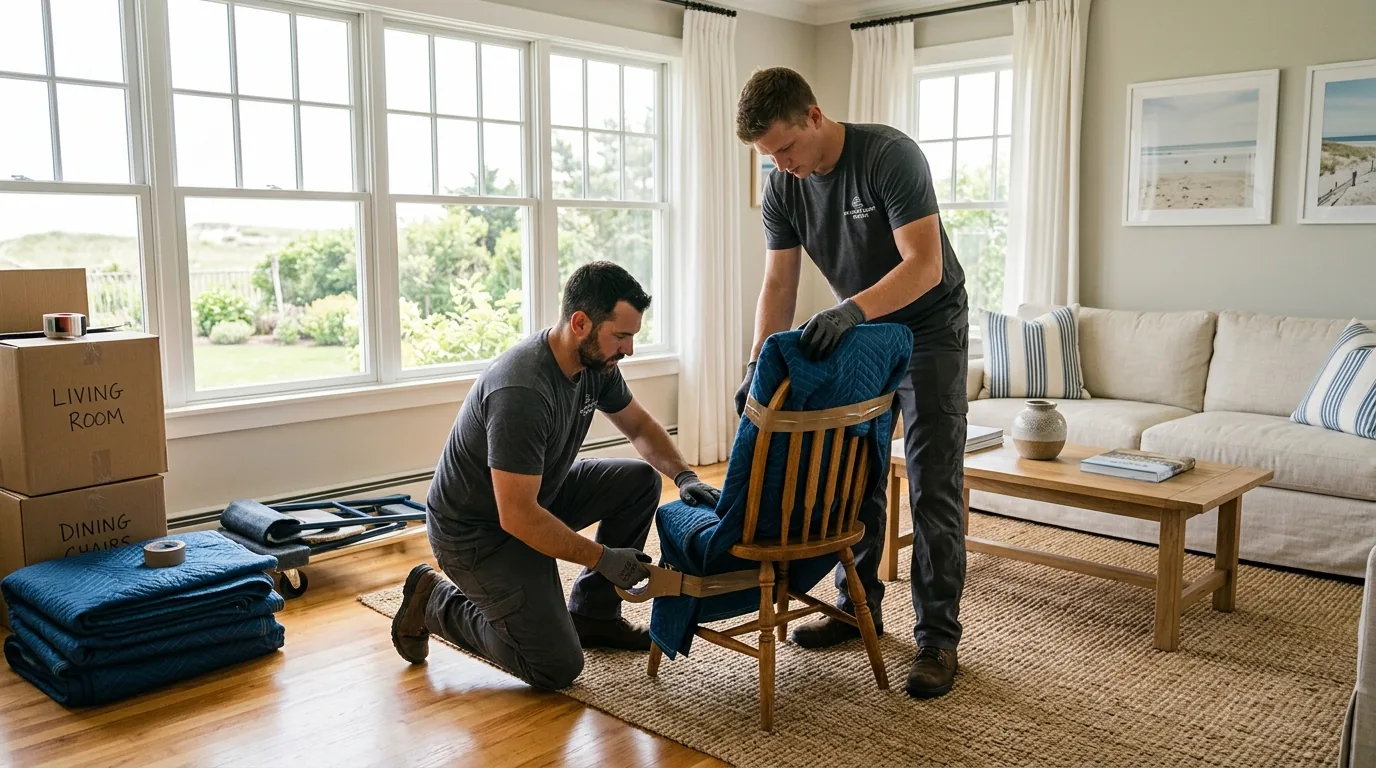
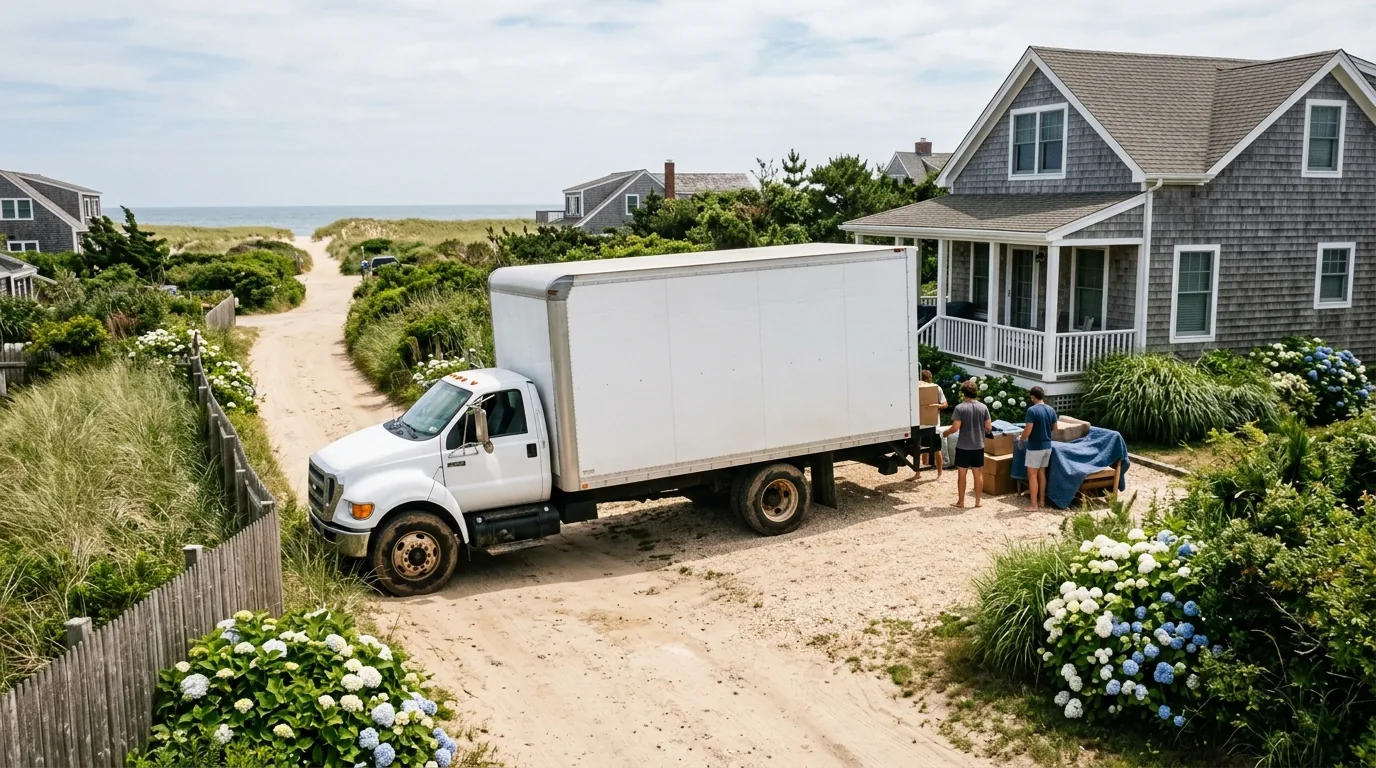
Residential streets near the beach and the village center are narrow, and summer congestion is significant. Outside the center, most homes have driveways — often sandy — which removes the on-street parking problem but creates its own: soft shoulders, tight turns, and limited room for a large truck. We scout access at the survey rather than discovering it on move day, and where a full-size truck cannot reach, a smaller shuttle vehicle is planned in advance.
No Montauk-specific moving permit requirement has been established. The hamlet is administered by the Town of East Hampton, and we check current rules against the Town of East Hampton official site before scheduling rather than assume last season's answer still holds. If your property sits inside a private community or managed complex, we confirm its rules at the same time.
Timing deserves its own paragraph. Between Memorial Day and Labor Day, traffic slows every job on the East End, and the season's edges — May and September — compress with moves tied to rental occupancy windows. Early-morning starts help. So does booking before the calendar fills.
A large share of Montauk moves begin or end in the city. The planning we apply when moving from NYC to East Hampton covers most of that corridor; Montauk simply adds the final stretch east, which is why timing decisions matter more here than anywhere else on the South Fork.
The homes and buildings of Montauk
Older shingle cottages get door, banister, and floor protection as standard. We measure staircases and tight turns at the survey, not during the move, and any piece that will not make a turn is flagged for disassembly or crating while there is still time to plan it properly.
Newer beach houses bring a different list: large glass panels, wide decks, outdoor furniture, board storage, and long carries from driveway to door over sand or gravel. Padding and floor runners go down before the first piece moves, and outdoor items are wrapped the same way as anything from inside.
Condos and co-ops, including the properties near Lake Montauk, sometimes ask for a certificate of insurance before allowing a move — standard practice across the New York metro area, even if it is less universal here than in the city. We issue certificates for any building on request. And because some beach-area homes sit in flood or hurricane risk zones, that fact is worth raising when we set your valuation coverage.
Art, antiques, and what a beach house holds
Montauk homes tend to hold art, mirrors, and objects collected over years rather than rooms of formal antiques. The coastal environment argues for real protection: pieces that live with salt air and humidity travel better crated than padded alone, and we plan that at the survey.
Our professional packing services cover full and partial packing, with custom crating for glass, canvas, and mirrors. Every crated piece is photographed before it leaves the house, so its condition is on record at both ends of the move.
Then there is the heavy and awkward category Montauk generates in quantity — surfboards, paddleboards, safes, and boat gear. Tell us about them at the survey so the plan and the quote both account for them. Nothing should be improvised on move day.
Where we work around Montauk
Montauk is the end of the road, but few moves end at the town line. Most connect somewhere else on the South Fork, or back to the city, and the same named crew runs the whole route rather than handing off at a depot.
Nearby towns and routes
East Hampton is the neighboring village and the seat of the town government that administers Montauk — the most common pairing we run, in both directions.
Moves between the hamlets share crews and equipment, so a household split across two towns is still one job with one inventory. That matters at the edges of the season, when dates compress and coordination decides whether a two-stop move finishes in a day.
The New York City to East Hampton corridor covers the city-to-South-Fork leg that most Montauk relocations share; from there it is one road east.

Moving services in Montauk
Questions Montauk clients ask
How much does a Montauk move cost?
Cost depends on inventory, access, and season, and no honest number exists before a survey. What we provide is a written, itemized quote explained line by line — the figure you approve is the figure you pay. Summer dates book earliest, so the calendar affects availability more than anything else.
Do I need a parking permit to move in Montauk?
No Montauk-specific moving permit requirement has been established, and most homes outside the village center have driveways, which simplifies staging. Because the hamlet is administered by the Town of East Hampton, we verify current rules with the town before every move rather than assume.
How far ahead should I book a summer move?
As early as you can. Memorial Day to Labor Day brings the heaviest demand of the year, and the season's edges compress because so many moves tie to rental occupancy windows. An early survey keeps your options open and locks a date before the calendar fills.
Will my condo or co-op require a certificate of insurance?
Some Montauk complexes and managed properties do, following standard practice across the New York metro area. Ask your board or building manager well before move day. We issue certificates of insurance for any building on request, with enough lead time for their review process.
Can you move surfboards, paddleboards, or a safe?
Yes. Oversized and heavy pieces are planned at the survey — crating for boards, proper equipment for safes — so move day involves no improvisation. Tell us everything unusual up front and the written quote will account for it.
Is storage available if my dates don't line up?
Yes. Seasonal moves often leave a gap between move-out and move-in, and our secure storage options hold your photographed inventory until delivery. One crew handles both ends, so nothing changes hands in between.

Next steps
Start with a conversation. A senior move coordinator will walk the property or review it by video, and a written quote follows — itemized, explained, and kept. If your plans touch a neighboring town as well, our movers in East Hampton work under the same process with the same crews. When you are ready, reach out and we will set a survey date.