

Sterling Oakbridge is a white-glove mover serving East Hampton with a named crew, written quote, and a photographed inventory as standard. Every relocation—whether estate-scale, in-town, or arranged remotely—begins with a thorough survey and a plan tailored to the street and property. Moves in East Hampton are shaped by historic homes, narrow tree-lined lanes, evolving parking regulations, and the distinct needs of primary and absentee owners.
What shapes a move in East Hampton
No two moves in East Hampton are exactly alike. Deep-rooted shingled colonials line Main Street alongside modern renovations and waterfront estates. The local calendar pivots on school terms, summer weekends, and a pace set by year-round and seasonal life. For many, the move means working around private roads, driveways too short for a full truck, and permit-only parking within village limits. Several historic blocks place restrictions on truck size, timing, and curb access—these are not always published but define what’s possible on move day. Summer gridlock is standard from Memorial Day to Labor Day; planning for arrival, load, and offload times takes coordination.
Access, protection, and paperwork all play a role: many homes require Certificates of Insurance (COIs) documented before the first box is carried inside. For details on other towns we serve, the New York service areas overview lists all Sterling Oakbridge coverage in the region.

Service scope included for East Hampton moves
- In-person or virtual pre-move survey: every detail of your home measured and walked.
- A written quote, itemized and explained by a senior coordinator.
- One named crew assigned from packing to placement.
- Photographed inventory, accessible during and after the move.
- Full or partial packing, custom crating for fragile and high-value items.
- Certificates of insurance issued for any building, as required.
- Storage—short- or long-term—available locally and at our controlled-access facilities.
- “Placement to plan”: furniture and boxes set by room and diagram, not at random.
How to choose a mover in East Hampton
Evaluate any moving company against East Hampton’s practical requirements:
- Written, line-by-line quotes. Pricing spelled out in detail, with every step described up front.
- Named crew and crew continuity. The faces who survey, pack, and drive should be introduced to you before move day—not chosen the morning of.
- Photographed inventory. Each item’s condition and details recorded—particularly crucial when moving remotely or safeguarding collections.
- Insurance documentation. Certificates of Insurance (COIs) drafted to property manager or owners association specifications, with all names correct for the building.
- Experience with historic homes. Steep stairs with worn railings, limited curb space, and original moldings demand hands familiar with preservation.
- Clear scheduling and advance calendar review. A Saturday truck in July is not managed like an off-season weekday; a mover should preview the traffic, event dates, or school calendar.
- Specific know-how for East Hampton parking and permits. The company should name which village rules apply, outline how they obtain parking or shuttle permits, and show proof of coordination—not just promise “local knowledge.”
These details set apart a mover equipped for the realities of East Hampton from those who simply promise fast service.
How a move in East Hampton runs with us
Every Sterling Oakbridge move starts with a deep survey of your East Hampton property—virtual for absentee owners, on-site for residents. We measure every doorway, staircase, and driveway. Your plan is drafted from these dimensions and your requests, with guidance on the right truck, the best days to avoid bridge traffic, and what flooring or landscape protections are needed. Your quote is precise and labeled: packing, cartons, COIs, storage, and each possible extra.
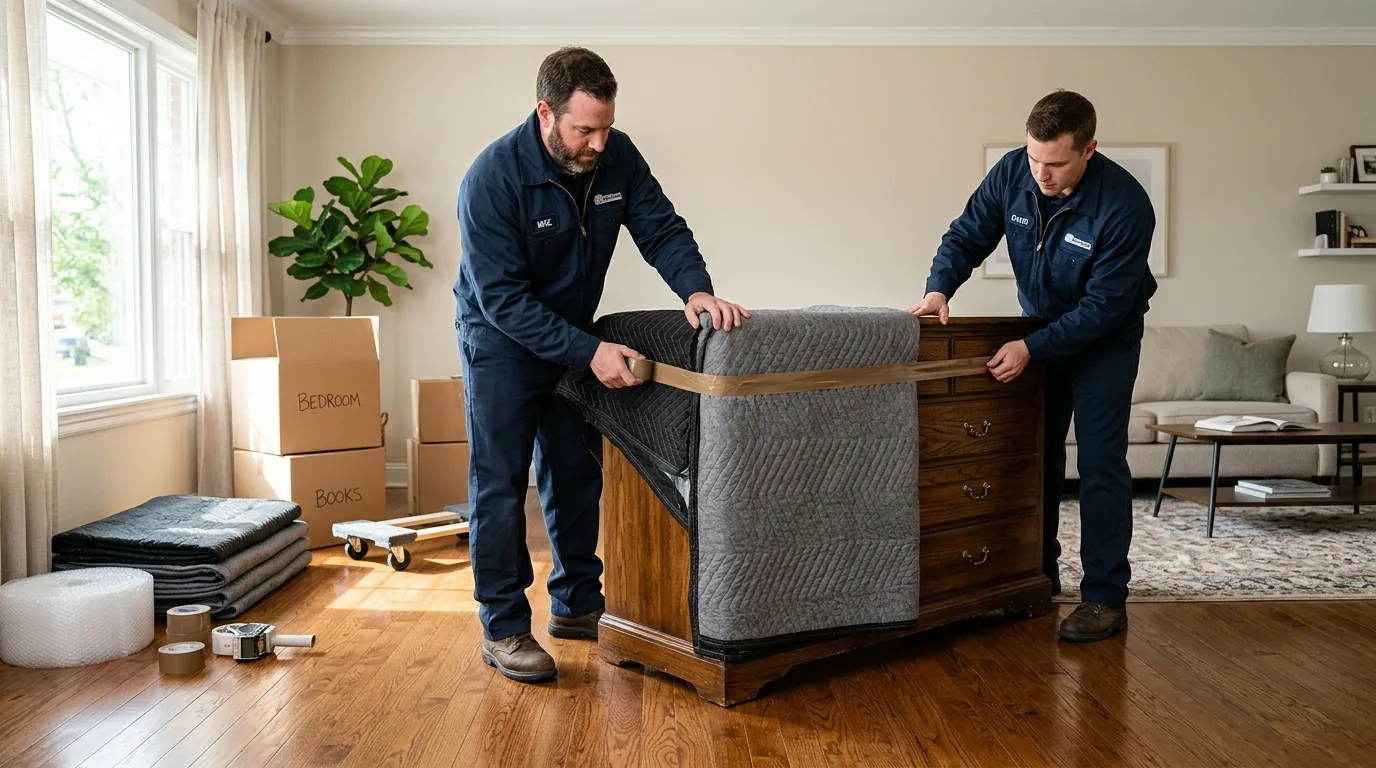
Packing is handled by your named crew—not day laborers—and in most homes this means rolling out floor runners to shield original wide-plank floors, cushioning built-in cabinetry, wrapping sharp corners, and taking stock of any custom finish or fixture. Fragile items are wrapped and entered in the visual inventory before any box closes. Wine rooms, gyms, and art collections are custom crated on-site; oversized beds or sofas are blanket-wrapped, readied for tight stairwells, and carried with backup.
On move day, your arrival is anchored to both permit hours and typical local traffic patterns. That could mean a sunrise start to beat summer gridlock, or rescheduling away from a street fair weekend. Before unloading, the block is checked for posted limits, neighbor alerts, and compliance—permits are visible in truck windows, and temporary cones mark access when allowed. Each delivered item goes straight to its marked place; packing debris is removed in full before we depart.

Access, parking, and permits: East Hampton realities
Parking in East Hampton is a patchwork that changes by season and address. Village rules enforce resident permits for parking near Main Beach and busy shopping areas—without the sticker, non-residents must pay daily fees, and spots tighten further every summer. Many of the roads wind between rows of old lindens and oaks or flank historic hedges; sometimes, a box truck can block half a street outright. Some historic districts set exact hours for curb access—only mornings, or certain calendar days.
For those without a year-round address, the village clerk’s office issues temporary residential permits, valid for up to two weeks. For major moves, detailed steps are handled ahead of time to prevent ticketing or last-minute delays; this usually means a mover submits license plates, property addresses, and truck details well before arrival. During summer, it's common to see larger trucks stage off private drives, with smaller shuttle vans completing the journey—sometimes, the last hundred yards are all that’s allowed by the owner’s association. Complete permit information is on the East Hampton Village official site.

Homes and buildings of East Hampton
Main Street's 18th-century frame houses and cedar cottages tucked off Amagansett Lane set a standard shaped by age and detail. Many homes here have hand-fit wainscoting, creaking stairs, or glass-walled sunrooms—every footprint mapped, corners checked for low beams and mudrooms measured for tight passage before move day. Waterfront estates present different patterns: gravel approaches, electronic gates, layouts with wings and upstairs galleries.
Here, protecting the setting is not optional. Before lifting a dresser, we wrap the doors and banisters; before carrying through the garden, we roll boards or canvas runners across brick, bluestone, or lawn. If a property manager needs a Certificate of Insurance, we submit documents to the right name before move day—no exceptions. Moves in buildings with elevators or remote service drives (rare, but present in a handful of local condos) are timed with staff and keyed access, so nobody stands idle at the loading dock.
Art, antiques, and valuables in East Hampton moves
East Hampton moves regularly involve collections built one piece at a time: framed oils, 19th-century clocks, mirrored console tables, and inherited Steinways. Each item is measured for its own crate or soft-wrap, with condition photos logged at pickup and placement. We never slide a case or piano down a hallway—two or more people lift, always with eyes on corners and tight turns. If climate control is needed, storage is arranged at our area or city facility. All valuables are documented in your photographed inventory, and these records remain available for your insurance or reference.
Clients needing specialized handling can learn more about our fine art and antiques moving—that includes direct communication with conservators, materials tested for archival safety, and documented handoffs throughout.

Nearby Hamptons and corridor routes
East Hampton moves often connect to the larger South Fork, including Bridgehampton, Sagaponack, and Amagansett. Each of these nearby towns sees the same process: detailed walk-through, named crew, permits filed early, and careful coordination with property managers. If you’re seeking movers in Montauk, your survey and written quote carry through, with added planning for remote sites, private beaches, or arrival at the farthest point east.
For those relocating between New York City and East Hampton, our NYC-to-East Hampton route includes packing for distance, storage at either end, and scheduling that works around holiday congestion and road closures. Route selection, load timing, and inventory tracking are managed by one project lead, from city apartment to Village porch.

Specialty moving services in East Hampton
Frequently asked questions about East Hampton moves
What is the cost to move to, from, or within East Hampton?
Costs vary based on scope: size of home, packing complexity, permit requirements, and seasonal traffic. Sterling Oakbridge provides written, itemized quotes after an in-person or virtual survey—there are no blanket prices or ranges given sight unseen.
Do I need a parking permit for moving trucks in East Hampton?
Most moves require resident or temporary parking permits, depending on address and time of year. Permanent residents use annual stickers; temporary permits are available for $10 per day (up to 14 days). Advance arrangements avoid complications on move day.
What insurance and documentation does Sterling Oakbridge provide?
We issue Certificates of Insurance (COIs) for any property, naming owners, associations, or managers as needed. Every move is covered by valuation protection explained in your written quote.
Are there restrictions for moving into homes within historic districts?
Historic zones may restrict truck size, hours for loading/unloading, and curb access. These rules are coordinated directly with the village, and accounted for in your move plan. Always verify restrictions early.
Can you handle high-value or fragile items (art, antiques, pianos)?
Yes. Art, antiques, and pianos receive custom crating, documented condition photos, and placement by multi-person crews. Details are logged in the photographed inventory, and insurance coverage can be added as requested.
Is secure storage available for East Hampton moves?
We offer secure storage options for short or long term, including climate-control for sensitive items. Storage locations are available both in the Hamptons area and at our primary facilities.
How do you coordinate moves for absentee or remote owners?
Virtual surveys and electronic documentation enable full move planning without your physical presence. Photographed inventories, real-time updates, and direct access to a senior move coordinator allow for full transparency throughout.
Next steps
Begin with a move survey—virtual or in-person—a written quote, and an explained timeline. Reach us through our site, by email, or via phone for consultation and scheduling. Every detail is mapped, quoted, and kept.
A tranquil East Hampton street, where historic homes and mature trees set the tone for local moves.